Happiness as Skill
Happiness as skill is Naval Ravikant's view that happiness can be trained like fitness, nutrition, or wealth creation. It is not merely inherited, found, or earned through success.
Core Idea
Naval treats happiness as the state that remains when the sense of something missing disappears. It is less about excitement and more about peace.
The practical claim:
- happiness can be improved
- habits shape baseline mood
- interpretation matters
- desire creates suffering
- presence reduces mental noise
- acceptance is trainable
Desire Selection
One of the book's sharpest ideas is that desire is a contract to be unhappy until you get what you want. The implication is not to become passive; it is to choose desires carefully. Naval renders this as two states: the contracted state (actively desiring something, therefore unhappy until it arrives) and the satisfied state (no active contract, peace by default).
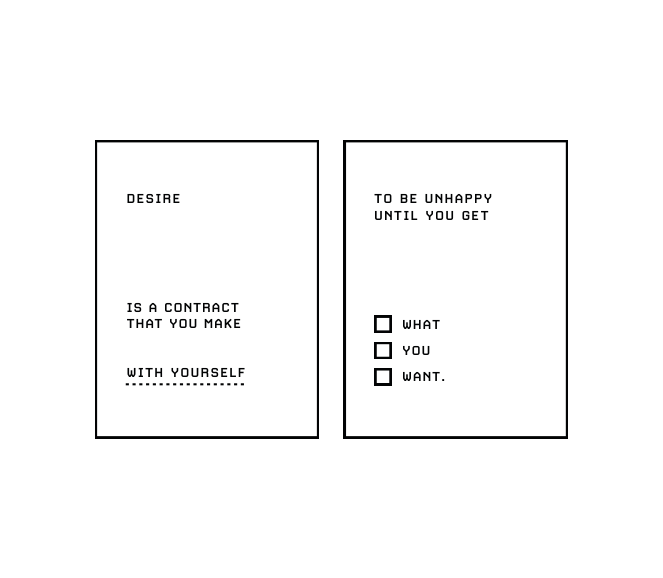
Naval's rule: have very few major desires at once. Each active desire consumes peace.
Acceptance Triad
For any situation:
- Change it.
- Accept it.
- Leave it.
The misery loop is wanting change while doing none of the three.
Tension vs. Relaxation
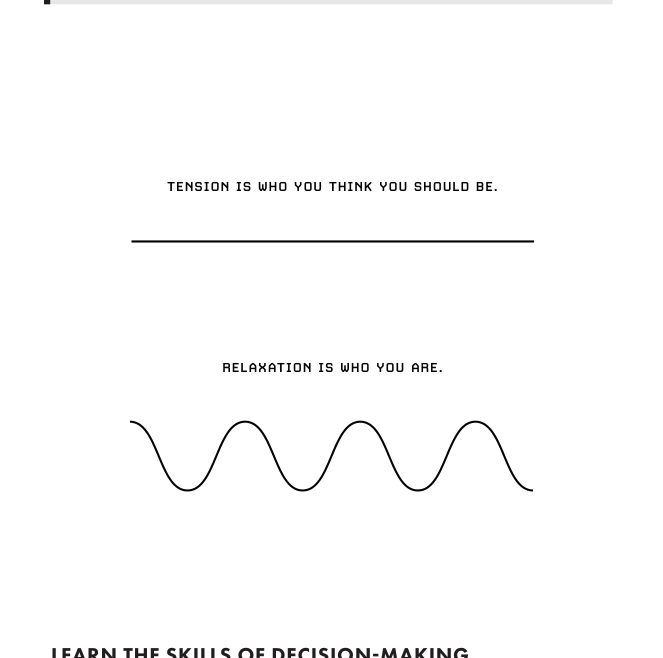
Naval distinguishes the chattering, effortful state — where you are performing who you think you should be — from the relaxed state, where you simply are who you are. Tension is the gap between the performed self and the actual self. Reducing identity ("lowering your identity") closes that gap.
Practices
- meditation
- exercise
- sunlight
- fewer mood-destabilizing inputs
- avoiding envy
- choosing positive interpretations
- reducing "shoulds"
- spending time with happy people
- protecting health before work
The Stevenson Complement
Howard-Stevenson's research with 150 high achievers reaches the same place from a different direction. In his four-dimensions-of-success framework, happiness is the dimension that is entirely me/now — unlike achievement (comparative), significance (other-directed), or legacy (future-defined). You cannot schedule it. You cannot produce it as an output of the other three.
His formulation, from his mother's Reader's Digest: "Success is getting what you want; happiness is wanting what you get." Naval's "desire is a contract to be unhappy until fulfilled" and Stevenson's "happiness is wanting what you get" are the same claim. Both locate the problem in the structure of wanting, not in the absence of things wanted.
Stevenson's practical add: by your 30s, you should know specifically what makes you happy and seek it out on a regular schedule. He has lunch or dinner with friends at least weekly — not because it happens to occur but because he knows it's what produces the state, and he protects it. This is the practice layer Naval gestures at but doesn't specify.